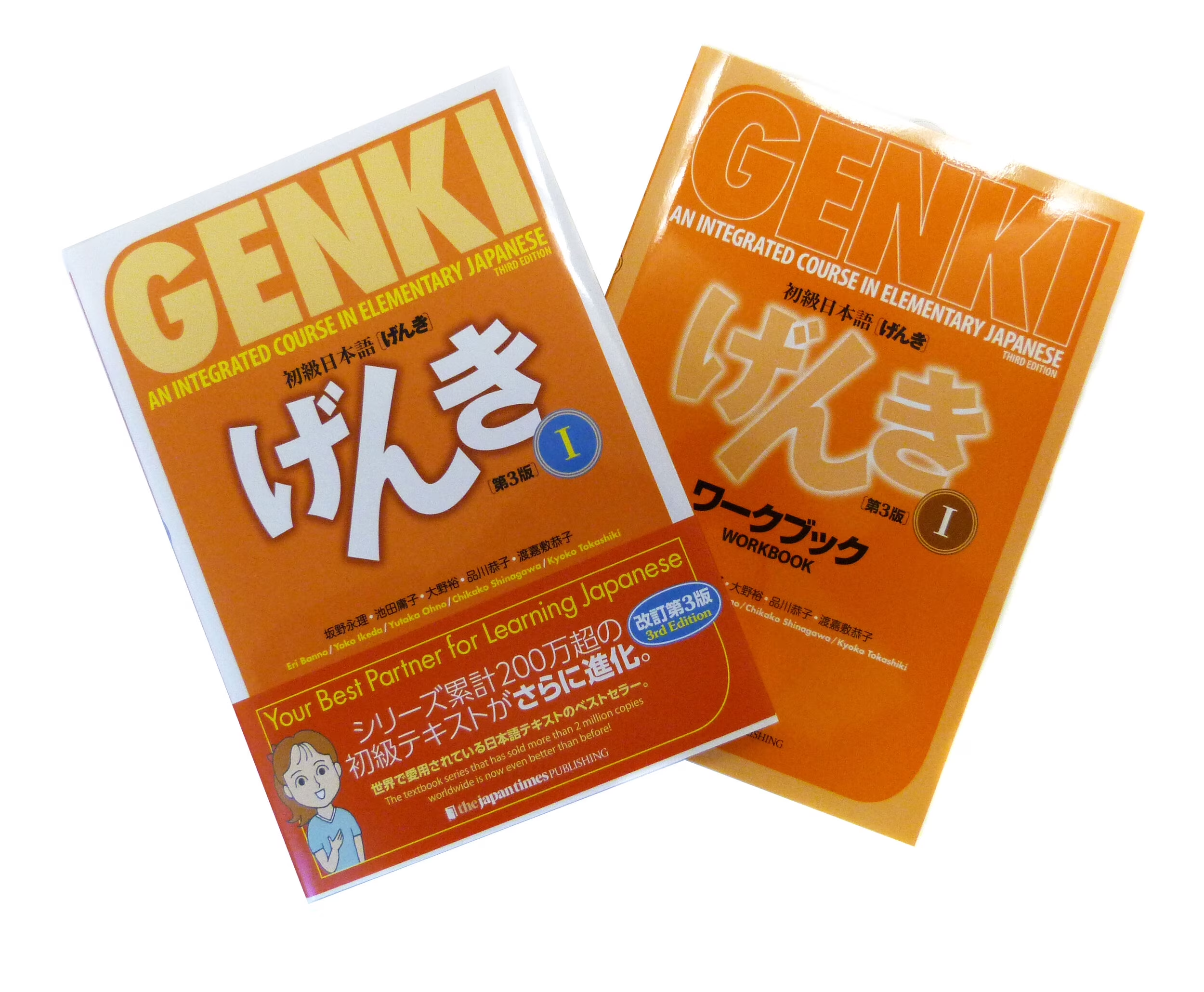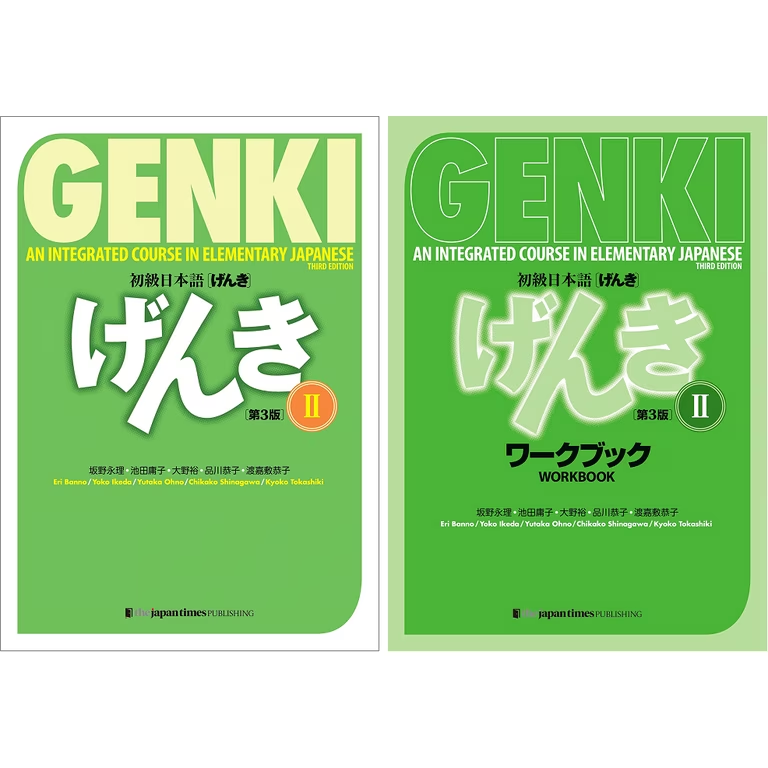
What to Do After Finishing Genki 2: Honest Next Steps for Intermediate Learners
Finishing Genki 1 is disorienting because you realize how little you can do yet. Finishing Genki 2 is disorienting for the opposite reason: the clear path suddenly disappears.
So, what now?
After Genki 1, the path was obvious. Start Genki 2. The series gave you a clear next step. After Genki 2, there’s no Genki 3. The scaffolding disappears. The community has strong opinions about what comes next, those opinions conflict with each other, and native Japanese content still feels completely out of reach even though you’ve put in hundreds of hours of study.
That gap is real, and it’s where a large number of serious Japanese learners quietly stop.
This article is about not stopping. Here’s what to do after finishing Genki 2, matched to what you actually want from Japanese.
Table of Contents
Where You Actually Stand After Genki 2
Let’s be direct about this, because a lot of people finish Genki 2 with an inflated sense of where they are and then feel blindsided when reality doesn’t match.
After Genki 2, you have solid N5 grammar and a functional understanding of most N4 grammar patterns. Your vocabulary is around 1,000 to 1,500 words if you’ve kept up with the vocabulary lists. You can read the example sentences in the textbook without too much difficulty, construct basic paragraphs about familiar topics, and follow slow, careful Japanese speech if you know the subject matter in advance.
What you cannot reliably do yet: read a graded reader above Level 2 without heavy dictionary use, follow a native speaker at natural speed, or watch anime without subtitles for more than a minute before losing the thread. JLPT N3 requires around 1,500 to 2,000 words and a command of grammar points that Genki 2 touches but doesn’t fully develop. You’re close to that threshold, not past it.
Knowing where you actually are matters, because the next steps look different depending on whether you’re trying to consolidate N4 or push toward N3 and beyond.
The Textbook Decision: Tobira vs Quartet
This is the question most Genki 2 graduates ask first, and it’s worth spending real time on because the wrong choice costs you months.
The short version: both intermediate textbooks are legitimate options. They’re designed for different learners, and the one you choose should match how you actually study, not which one sounds more impressive.
Tobira: Gateway to Advanced Japanese
Tobira is the long-standing post-Genki recommendation and has been for roughly 15 years. It uses authentic texts from Chapter 1. The reading passages are real Japanese on real topics: Japanese society, culture, environmental issues. The vocab is a significant step up from Genki 2, the grammar explanations are dense, and the workload per chapter is substantial.
Who Tobira suits well:
- Learners targeting JLPT N3 or N2 on a defined timeline
- People who work well with structured, textbook-heavy study
- Those who have a study partner or tutor, since Tobira was designed with classroom use in mind
- Learners who want grammar explanations they can reference for years afterward
Where Tobira is harder than it needs to be:
- Self-study without a teacher is genuinely more difficult. The answer key for the main textbook is sold separately.
- The jump in difficulty from Genki 2 is steep. The first few chapters will feel hard. That’s normal, but it catches people off guard.
- The layout and design are functional rather than engaging. Some learners find it dry.
Quartet
Quartet is newer, increasingly popular among self-studiers, and structured differently from Tobira. It covers similar ground at a somewhat gentler gradient. The grammar explanations are more intuitive for learners working alone, the layout is cleaner, and the progression between chapters feels deliberate rather than abrupt.
Who Quartet suits well:
- Self-studiers who found Genki 2 manageable without a teacher
- Learners who want thorough grammar explanations without needing to cross-reference a separate answer key
- Those who prefer learning through shorter, varied text types rather than long dense readings
Where Quartet has trade-offs:
- Less time-tested than Tobira. The community feedback is positive but thinner, since the book is newer.
- The vocabulary load is significant regardless. Post-Genki 2 study requires serious vocabulary acquisition no matter which textbook you choose.
- Quartet 1 covers roughly the same level as the first half of Tobira. You’ll likely need both Quartet 1 and Quartet 2 to reach the same point Tobira takes you.
The honest conclusion
If you have a tutor or study partner: Tobira. Its depth rewards guided study.
If you’re fully self-directed and Genki felt manageable solo: Quartet.
If you’re targeting a JLPT exam on a specific date: Tobira, because it’s better aligned to JLPT grammar points and has more community resources around exam prep.
Neither book works if you don’t open it. Pick the one you’ll actually use consistently.
Check out our article on Tobira vs Quartet here!
Your Goal Decides What Comes Next

The textbook question is just one part of the picture. What you do alongside your textbook matters as much as which textbook you choose.
Goal 1: Pass JLPT N3 (or N2)
If you have an exam date in mind, the path is structured enough to plan around.
Your grammar resource is Tobira or Quartet alongside BunPro’s N4 and N3 grammar paths. BunPro organizes grammar points into a spaced repetition review system and covers JLPT levels explicitly. At the N4 to N3 boundary, the patterns get more nuanced and the distinctions between similar grammar forms get finer. BunPro surfaces those distinctions systematically, which a textbook alone doesn’t always do efficiently.
Your vocab resource needs to be deliberate. N3 requires around 1,500 to 2,000 words; N2 requires roughly 3,000 to 6,000. Anki with sentence cards is the most efficient approach at this level. Mining vocabulary from reading you’re already doing produces better retention than drilling decontextualized word lists.
For listening, the N3 listening section trips up a large number of candidates who have solid grammar but limited exposure to natural spoken Japanese. The JLPT listening format is specific: you hear a conversation once, then answer comprehension questions. Start building a daily listening habit now, not two months before the exam. Nihongo con Teppei for Beginners is well-calibrated for this level. The intermediate series is too fast at first; start with the beginner episodes and graduate up.
Goal 2: Speak and Be Understood
If conversational ability is the priority, the central problem after Genki 2 is output. You know grammar patterns. You can read them. Using them under real communicative pressure is a different skill entirely.
One session per week with a patient tutor on italki does more for production fluency than an extra chapter of Tobira. The discomfort of struggling through a conversation in real time is the mechanism, not a sign you need more textbook study first. italki has tutors who specialize specifically in post-beginner Japanese learners and can run sessions that target your actual weaknesses rather than working through a generic curriculum.
Keep working through your chosen textbook for structural support. But treat speaking practice as a non-negotiable part of the week, not something to start after you feel more prepared.
For listening development: watch content at your approximate level with Japanese subtitles, not English ones. Your reading speed at N4 to N3 is fast enough to follow simpler subtitles if you choose content carefully. Slice-of-life anime with straightforward vocabulary is more useful for developing listening fluency than dramas with rapid casual speech.
Goal 3: Read Native Content and Enjoy Japanese Media
This path has the longest runway after Genki 2, and it’s the one where the intermediate plateau is most visible. You can read slowly with a dictionary. Reading at a pace that actually feels enjoyable takes more time.
The most practical bridge tool at this stage is Satori Reader. It provides graded native-adjacent Japanese content with inline grammar and vocabulary support that you can turn on or off depending on your comfort level. The early series are genuinely accessible post-Genki 2. Unlike a raw novel or manga, Satori Reader is calibrated to produce comprehension without exhaustion, which is what builds reading stamina at this level.
For manga: Yotsuba&! remains the clearest entry point. With Yomitan installed in your browser for online text, you can also start reading NHK Web Easy articles. They’re written in simplified Japanese for non-native readers and cover real news topics, which means the vocabulary is practical rather than fictional.
The reading speed you want takes months to develop. Set a sustainable target: 15 to 20 minutes of Japanese reading per day, every day, beats one long weekend session by a significant margin over a six-month period.
The Vocab Gap: What to Do About It Now
Grammar is not your bottleneck after Genki 2. Vocabulary is.
Genki 2 leaves you with around 1,000 to 1,500 words. JLPT N3 requires roughly 2,000. Comfortable native reading requires somewhere between 5,000 and 10,000. That gap doesn’t close through textbook study alone. It closes through consistent, deliberate vocabulary acquisition over an extended period.
Two approaches work at this level:
Anki with sentence cards: Rather than drilling isolated words, you create or download cards that show the word in a sentence, with audio where possible. Context produces significantly better retention than a word-meaning pair on its own. The Kaishi 1.5k deck is too beginner-focused for where you are now. At N4 to N3 level, sentence mining from Satori Reader articles or graded readers produces more relevant vocabulary because you’re learning words you’re actually encountering.
jpdb.io. This is an Anki alternative that uses frequency data to prioritize which words to study based on specific media you want to read or watch. If you want to understand a particular anime or novel, jpdb lets you build a deck around its specific vocabulary first. For learners who find Anki’s setup process frustrating, jpdb is considerably more accessible.
Check out or article on jpdb.io vs. WaniKani here!
For Kanji: if you’re not already using WaniKani or a dedicated kanji system, post-Genki 2 is the point where the absence of one becomes genuinely painful. The kanji load in Tobira and Quartet is substantially higher than Genki 2. Learners who reach this level without around 500 to 600 solid kanji find textbook reading significantly harder than it needs to be. WaniKani at consistent use will get you to Level 20 and roughly 600 kanji in four to six months.
A Realistic Weekly Schedule
This is what a sustainable post-Genki 2 week looks like at six to seven hours total. Adjust for your schedule, but keep daily vocabulary and kanji reviews as the fixed items that don’t move.
| Day | Activity | Time |
|---|---|---|
| Monday | Tobira or Quartet: new chapter grammar + exercises | 45 min |
| Tuesday | Anki sentence cards or jpdb reviews + new cards | 20 min |
| Wednesday | Reading practice: Satori Reader or graded manga with Yomitan | 30 min |
| Thursday | BunPro grammar reviews (N4 path or N3 path) | 20 min |
| Friday | Tobira or Quartet: reading section + vocabulary review | 40 min |
| Saturday | Speaking session via italki or listening practice | 30 min |
| Sunday | Review weak grammar points; free reading or anime with Japanese subtitles | 30 min |
The specific activities matter less than the underlying discipline. Something in Japanese every day, even on the days when it’s only 15 minutes of reviews. The learners who push through the intermediate stage and come out the other side are rarely the ones with the most sophisticated study plan. They’re the ones who kept showing up long enough for the vocabulary and grammar to compound into something that actually works.
Is Genki 2 enough to pass JLPT N4?
Close, but probably not without additional preparation. Genki 2 covers most of the grammar you need for N4, but the exam also tests listening comprehension and vocab in ways the textbook doesn’t fully address. A focused three-month N4 prep period using BunPro’s N4 grammar path and targeted listening practice after finishing Genki 2 is more reliable than going straight to the exam.
Do I have to use a textbook after Genki 2, or can I just immerse?
Full immersion without structured grammar study is a legitimate path, but it works better at a higher baseline than most Genki 2 graduates have. At N4 level, the grammar gaps are significant enough that encountering a new structure in native content without a framework to make sense of it produces a lot of confusion and slow progress. A textbook alongside immersion produces faster overall development at this stage than immersion alone.
How long does Tobira or Quartet take to finish?
At a similar pace to Genki 2, Tobira takes four to eight months for self-studiers. It has 15 chapters but each is more demanding than a Genki chapter. Quartet 1 is roughly comparable in length. Both books reward slowing down over rushing through them.
Should I switch from WaniKani to Anki after Genki 2?
Not necessarily. If WaniKani is working for you, keep using it. It’s consistent, requires no deck management, and produces solid results if you stay on the schedule. The case for switching to Anki at this level is that you can mine vocabulary from real content you’re actually reading, which produces more contextually relevant cards. If you’re finding WaniKani’s vocabulary selections feel disconnected from what you’re actually encountering, that’s a signal to consider a switch or supplement.
I finished Genki 2 months ago and my Japanese feels rusty. Do I need to review everything first?
No. Re-reading both Genki books is not a good use of time. Use BunPro’s N5 and N4 grammar paths to identify which patterns have faded and review those specifically. Start your new textbook and treat the first few chapters as a revision period. Active engagement with new material while also reviewing what’s rusty is more efficient than a complete review before progressing.
What’s the biggest mistake people make after finishing Genki 2?
Waiting. Waiting until they feel ready to start a new textbook. Waiting until their vocab is stronger before trying to read. Waiting until their grammar is more solid before speaking. The intermediate plateau exists partly because the structured safety of a beginner textbook disappears and the next step requires more tolerance for ambiguity. The learners who move through the plateau fastest are the ones who pick a direction and start, accepting that the first month will feel uncomfortable.
What to do after Genki 2 comes down to one decision: pick a textbook, pair it with a vocabulary system you’ll actually use, and start this week rather than next. Tobira if you have support or an exam deadline. Quartet if you’re working solo and want cleaner self-study. BunPro and Anki or jpdb in the background for grammar and vocab consolidation. Satori Reader or graded content if reading native material is your actual goal.
The gap between Genki 2 and real Japanese is real, and it takes time. The only way through it is through it. Or if you’re interested in other Japanese textbooks we also have a fully fledged japanese text book guide designed for you!
Still not done with Genki 2? Check out our article on for after you finished Genki 1 here!
Want to learn how long it takes to finish Genki 1? Check out our guide on the length of Genki 1 here!